Friday, July 30, 2021

 Once a Nagrammite ...

As a small boy, I opted to study at the National Grammar School, Nike in Enugu by choice. Before applying for admission in the school, I had heard about their exploits: in sports, particularly football; in discipline; and above all else, in academics.


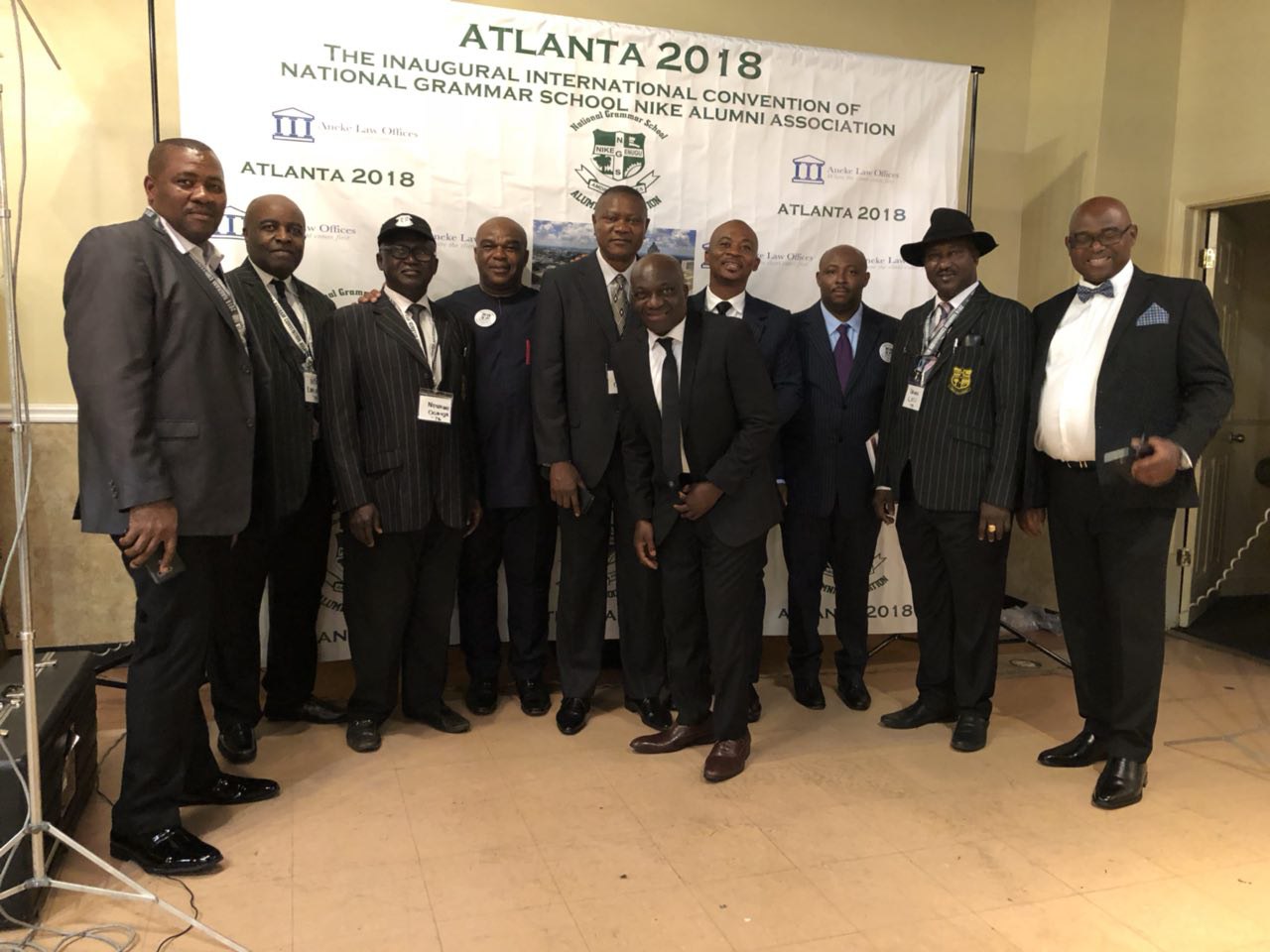
I was privileged to participate in the 2018 Inaugural Convention of the alumni of this great institution which took place in Atlanta, USA.


It was a massively successful event in terms of its organisation, the number and sheer depth of its attendance, and the resolutions adopted.
I can’t wait for a convention to be hosted by those of us over here in Europe, particularly, the United Kingdom.


I am sure Dr Azubuike Udoye and his versatile and talented team are keeping their eyes on the bigger picture.
Once a Nagrammite, always a Nagrammite.

 Another Dot-in-the-Circle Statistics:

According to the Nigerian
Olympics
Committee (NOC), nearly 50% of the 60 athletes representing Nigeria in the on-going 2020 Tokyo
Olympics
games are Igbo people.
In fact, over 66% of the team members of the Basketball teams (both men and women with each having 12 members) are Ndi-Igbo.
This is not a bad record for the Dot-In-The-Circle nation.
The moral of the story?
You subjugate and suppress the Igbo race at your own peril!!!
K'OkwuaDiliChukwu


Friday, July 23, 2021

 My Son is also an ORIE Boy

I had been indulging in chest-beating, like the elated gorilla, in an effort to cheer myself up as an unrepentant and unapologetic Igbo irredentist. Not until my friend, Ichie Onodugo Nwafo Nwafo visited me earlier today.
In the course of our discussion, one of my kids served him some drinks. As the boy made for the exit, Ichie Nwafo called him back. Looking my boy in the face, Ichie Nwafo asked him: "Gini ka nna gi n'akpo gi?" (to the uninitiated, that means: what name does your father call you?). The boy smiled ignorantly, turned and looked in my direction as if saying "Dad, you did not teach me that". Of course, I ducked his prying looks.
Ichie Nwafo exploded with laughter. And after dismissing my son, the white-bearded visitor looked at me and continued laughing over his discoveries.
"That is the problem I have with you FOREIGN NDI-IGBO", he started. He took a mouthful of the Stella Artoirs beer, wiped his mouth, and continued. " You see, you people are killing our culture!" No, I wasn't prepared to stomach that, not after my contributions in promoting our cultural heritage.
So I challenged him. For the next ten minutes or so, he lectured me on the need for all Igbo people, both at home and abroad, to join in the propagation and retention of the "rich language and culture of the Igbo people."
I defended myself by informing him that my kids bear only Igbo names. "That is not enough!" he thundered. "They also need to speak the language."
As our conversations wore on, I sought to find out why he bore two "NWAFOR" names. He explained that his first name was "NWAFOR" having been born on an Afo market day. The second "NWAFOR" belongs to his family ancestry. I remembered (and told him so) that I was also born on an "AFOR" day hence my names also include "OKAFOR". He demanded that I spelt my own version of “OKAFO” which I did instantly, with an "R" at the end. He rejected that outrightly as being anglicised and therefore foreign because of the last letter. He informed me that none of his names contained the letter “R” at the end.
When he left, I googled Igbo Calendar and found out that the other name, which was not given, for my son is also “OKORIE” since he was born on an “ORIE” day. When I told the boy, while my wife looked on, he laughed it off. My wife? She was not amused by the name.
By the way, does your own child bear any Igbo market day names? If not, why?

 THE IGBO RACE: A TIME TO SEEK SOFT POWER IS NOW!!!

According to Osagyefo Kwame Nkrumah, those who successfully obtain political kingdoms (or powers) will have all else added unto them.
Ndigbo fell out of power after they lost what I call PHASE ONE of the Biafran struggle in January 1970. The fallout of that loss is still haunting the Igbo race till today.
Computer wares come in both HARD and SOFT. Hence there are HARDWARE and SOFTWARE. I will try not to delve into these two concepts too deeply here so as not to divert the focus and essence of this discourse.


Computer hardware is just a piece of equipment. Without the software, the hardware is useless waste of human energy, time, and space. Same goes for HARDPOWER in governance. SOFTPOWER is political power pure and simple, while HARDPOWER is economic power (and others). So, when the sage Nkrumah urged Africans to seek political power first and foremost, he was asking them to acquire SOFTPOWER.
Now, Ndigbo, especially the young, have successfully demonstrated that they have acquired the HARDPOWER. If you are still in doubt, please download and watch videos of OBI COBANA show which took place in Oba, Anambra State last weekend. That was the best physical demonstration and attestation of the ECONOMIC SURVIVAL of the Igbo race.
Furthermore, all over Nigeria (and beyond), there are physical testimonies of the Igbo man’s economic survival – in industries such as entertainment, real estate, manufacturing, etc, etc. So, from these perspectives, we have successfully banished the pains and insult inflicted on Ndigbo by the scourge of the £20 and abandoned property issues.
My worry, however, is that without a backup SOFTPOWER, all these “achievements” will come to nothing because, it takes just one depraved lunatic at the top of government destroy or reverse them.
And so, all the talks of marginalisation, referendum, restructuring, and presidency by Ndigbo will amount to nothing until we acquire, control, or influence political (or SOFT) power. If you doubt the veracity of this standpoint, then look no further than to what happened to Chief MKO Abiola’s political ambition. The man had all the economic (or HARD) power, in fact, more than any living Nigerian of his day Yet, he couldn’t secure the pollical power. I recall that, at one point, one notable Northern political bruiser, Umaru Dikko, was quoted as reminding MKO that the presidency was not for sale, even to the highest bidder!


Are you still in doubt of the supremacy of SOFTPOWER over HARDPOWER in governance? Even the imposition of £20 on Biafran returnees irrespective of the millions they had in Nigerian banks before the war is another case in point. Or, for that matter, why are we berating the ABANDONED PROPERTY issue 50-something years after the civil war?


What these and many other examples of how SoftPower controls HardPower litter the terrains of history. In America, there is the antitrust legislation which, on paper seeks to curb the monopolistic powers of large corporations. Additionally, however, this law is used by government in controlling and reducing the powers of individuals and businesses by splitting their empires into smaller less powerful units. This way, those affected can not muster enough resources and, yes, powers to challenge the government.

#K’OkwuaDiliChukwu

<<< Also published at: https://m.facebook.com/story.php?story_fbid=4857652234262264&id=100000526056358 >>>

Saturday, February 06, 2021

NIGERIA: re-COLONISED BY CATTLE!

 Part of the trouble with Nigeria is that the central government has no progressive plan to tame the rampaging herdsmen who unleash their cattle anywhere and everywhere.

Even during the morning rush hours on working days in Abuja, the capital city of Nigeria, precious hours are wasted by workers who are held hostage on their way to work by logjams created by the herdsmen and their cattle!


Sunday, June 28, 2020

The Coal City Village Square:


AN ENCOUNTER BETWEEN SOME DONS AND AN “ILLITERATE” BONESETTER:

The cosmopolitan nature of Enugu, the one and only 042, attracted a multiplicity of talented people seeking to exploit the opportunities existing in the city. The lure, power and sheer attractiveness of this city used to be so compelling that a lot of youngsters abandoned their villages and migrated to Enugu in search of the proverbial greener pastures. As they did so, they brought with them their various talents.
But some of those migrating talents were not youngsters. Like one traditional bonesetter who lived in Ogui urban area (which some people derogatorily nicknamed URBAN JUNGLE).
So popular was this man that some footballers from Enugu Rangers, Vasco Da Gama and elsewhere who broke either legs or arms preferred the man’s services to seeking medical help at the local orthopaedic hospital.
In fact, as the story went, even some of the cases which could not be “properly” treated at the orthopaedic hospital found themselves in the man’s “clinic”. The increase in clientele brought both fame and fortune to this man.
One day, again, as the story went, some professors from the University of Nigeria Nsukka paid a courtesy visit to the bonesetter, whose “clinic”, remember, was based in URBAN JUNGLE. They explained to him that they had come “to explore avenues for possible symbiotic and collaborative research endeavours“ with the uneducated bonesetter.
But, again, as the story went, the bonesetter did not understand his visitors’ grammar. He bade them to find some space on his wooden benches to rest their bums.
As is usual with the traditional Igbo culture, the host presented some kolanuts to his distinguished visitors. While breaking the nuts, he reeled out a basketful of proverbs one of which was a veiled threat craftily camouflaged and embellished like a kind of prayer that says: “obialu be onye abiagbu kwala ya…” They thanked the man and greeted him with a litany of excuses, some telling him not to bother (about kolanuts) because they had had “something” already before coming to his house. Some others took their own pieces and buried them in the pockets.
The grey old man sat down, his eyes dancing from one face to the other, and attentively listening to his guests as they lectured him on the “various benefits to knowledge and the advancement of science and medicine” their proposed collaborative research endeavours would bring. One of them pointed out that one of such benefits would be to help “in modernising the crudity of the bone-setting practice, and easing the pains to patients so as to integrate it into mainstream health care delivery.”


While the eggheads were scampering and struggling in their efforts to explain their ideas and visions to the bonesetter in clearer, more understandable level, his patience was hitting the floor. As the man’s anger and disdain for his visitors reached a boiling point, he cleared his throat to draw the attention of his visitors.
The pin-drop silence in the room was palpable as the lecturers paused to hear their host. The diminutive, heavily greyed old man rose to his feet, with his eyes probing faces before him. Summoning as much decorum as his temperament could accommodate, he told his guests that he totally understood what they wanted from him.
He told them to wait while he fetched “something” from his inner room. As he moved inside, his guests started glancing bewilderedly at each other, trying to decode the man’s intentions. As soon as the man alighted from his inner room brandishing his Awka-made dane gun, his guests scampered and scrambled for their lives!
(…What followed thereafter ...?)

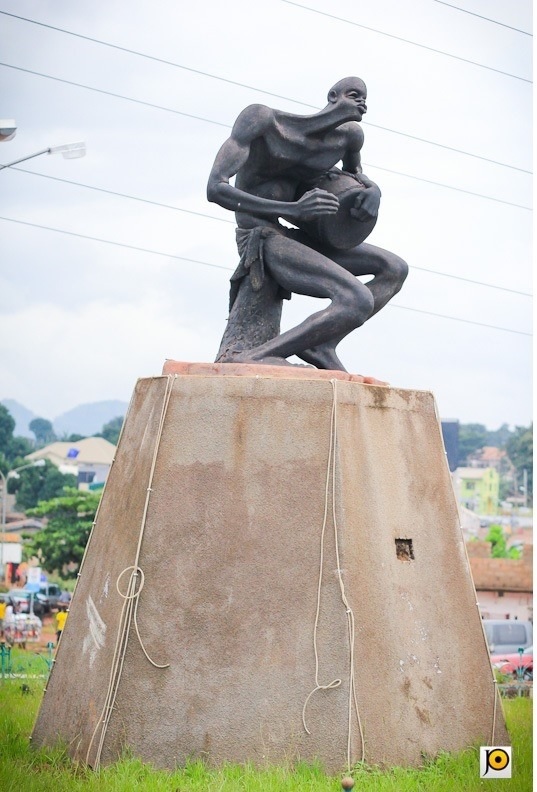
The Popular Oti-Igba Statue

>>>> You can also catch me at my Facebook page: https://www.facebook.com/dili.ojukwu/ <<<<<

Saturday, June 27, 2020

A SPRITUAL RUMBLE: OKIJA MASQUERADE VS. INYI-AGBOKU

Growing up in Ogui Nike can be a bit of fun; but sometimes, it can be scary.

Easter celebrations were usually more popular and noisier than, say Christmas, in Enugu. The reason being that most people travelled to their villages during Christmas celebrations. And this normally leaves Ogui, especially Obiagu Road, the cultural nerve centre of Enugu, virtually empty.
As kids, we used to converge in our small groups, singing and dancing to Ogene tunes, to the delight of our teaming spectators who would, in appreciation, throw some wads of money to us. Whenever a bigger and more fearsome, and in most cases, dangerous, masquerades approached, we would cluster, stoop and kneel in obeisance to the rampaging masquerades who would not accommodate, even little minions like us sharing the stage, attention and adulation with them.
And so, during one of those Easter festivities, we were plying our usual trade on the famous Obiagu Road when one Okija masquerade came threatening. Of course, we did the usual needful: knelt down, and continued singing and beating our Awka-made gongs.
Not too long after the Okija masquerade, well known for its ability to grow as tall as the sky in one swoop and as short as a Congo pigmy in another second, had passed us by, another big masquerade came threatening.
As we knelt down, including our Okwomma masquerade (chai!!), we heard the guttural voice of the deadly Inyi-agboku masquerade, singing some weird esoteric songs. The spirit, yes, that is what a masquerade is, approached us and asked us which direction the masquerade known for hitting its head on the ground when dancing had gone. We pointed the kindred spirit to the direction the Okija masquerade went.
The next minute, we were all spectators: watching the confrontation between Mmanwu Okija and Inyi-agboku from Awkunanaw. Sadly, some of the exchanges were conducted in the spirit world as most of us, little, innocent souls, were not initiated into voodoo practice. But the physical fight we witnessed was both scary and entertaining.
The Inyi-agboku warned its opponent not to hit the ground again with its head. But, after dancing for a second, the defiant Okija masquerade hit its head on the surface of the earth again! Then, all hell went berserk as the Okija masquerade’s head was transfixed to the ground. There was pandemonium: people ran helter-skelter, screaming...

(...Haven't you heard enough for now?…)
(Published on Facebook: https://www.facebook.com/dili.ojukwu/posts/3632655793428587)


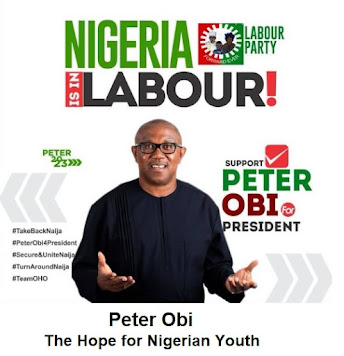
PETER OBI MOVEMENT AND NIGERIAN YOUTH EMPOWERMENT

  The youth constitute the greatest force in any polity. The torrent of their power can dislodge and uproot the strongest political barrier ...