Saturday, June 18, 2022

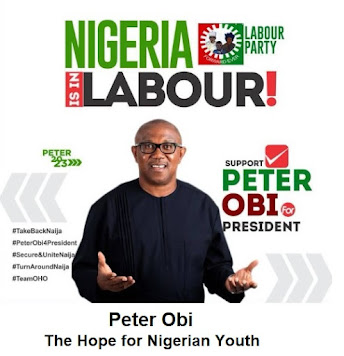
PETER OBI MOVEMENT AND NIGERIAN YOUTH EMPOWERMENT


The youth constitute the greatest force in any polity. The torrent of their power can dislodge and uproot the strongest political barrier with ease.


However, one of the major impediments confronting the youth is how to articulate and galvanise their divergent and multifarious interests into one focus. This is where good, articulate, visionary, and dynamic youth leadership becomes imperative.


For years, Peter Obi has been subtly sensitising, organising, and nurturing the Nigerian youth through his various public speeches. He recognises the potential capacity of the Youth to change the political dynamics and direction of Nigeria.


The result?

The Nigerian youth are now determined more than ever before to take over the reins of power. To them, the age-old maxim of the youth being the leaders of tomorrow no longer holds any promise. Which tomorrow is it, they ask?


Look at the composition of the current Buhari government. Where is the strategy to integrate the youth into the body politic? Even the first national effort to stop police brutality through the #EndSars protests was summarily quashed by the same police and other military forces.


Again, look at the torch bearers of the main political parties warming up for 2023. Where are the youth leaders of tomorrow (2023)? They have been schemed out by dollar-bribing old political class. You can begin to appreciate and applaud the vision and intelligence of Peter Obi when, having read the handwriting on the wall, decided to jump out of the PDP vote-buying primaries.


This explains why Nigerian youth are coagulating and gravitating towards the Peter Obi Movement in their droves. They know that this Movement provides them the only veritable platform to bring their multifarious grievances into one potent force that can finally make NIGERIAN YOUTH THE LEADERS OF TODAY.


They know that the man Peter Obi symbolises accountability, probity, opportunity, job creation, and sustainable development. Not the corruption-ridden, bribe-distributing group of old and clueless band of political turncoats that populate the leadership of the other parties.


#KaOkwuaDiliChukwu

Friday, July 30, 2021

 Once a Nagrammite ...

As a small boy, I opted to study at the National Grammar School, Nike in Enugu by choice. Before applying for admission in the school, I had heard about their exploits: in sports, particularly football; in discipline; and above all else, in academics.


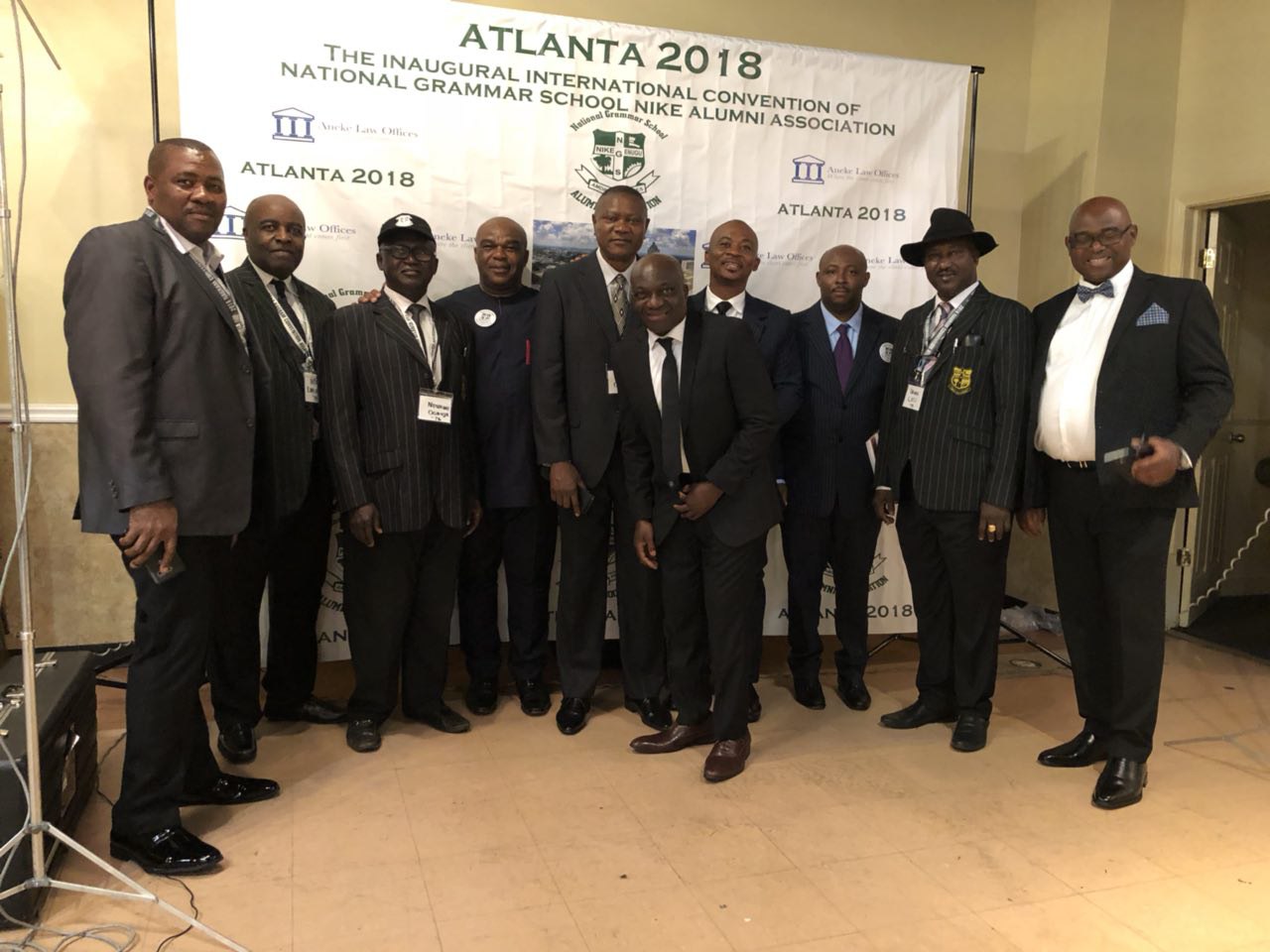
I was privileged to participate in the 2018 Inaugural Convention of the alumni of this great institution which took place in Atlanta, USA.


It was a massively successful event in terms of its organisation, the number and sheer depth of its attendance, and the resolutions adopted.
I can’t wait for a convention to be hosted by those of us over here in Europe, particularly, the United Kingdom.


I am sure Dr Azubuike Udoye and his versatile and talented team are keeping their eyes on the bigger picture.
Once a Nagrammite, always a Nagrammite.

 Another Dot-in-the-Circle Statistics:

According to the Nigerian
Olympics
Committee (NOC), nearly 50% of the 60 athletes representing Nigeria in the on-going 2020 Tokyo
Olympics
games are Igbo people.
In fact, over 66% of the team members of the Basketball teams (both men and women with each having 12 members) are Ndi-Igbo.
This is not a bad record for the Dot-In-The-Circle nation.
The moral of the story?
You subjugate and suppress the Igbo race at your own peril!!!
K'OkwuaDiliChukwu


Friday, July 23, 2021

 My Son is also an ORIE Boy

I had been indulging in chest-beating, like the elated gorilla, in an effort to cheer myself up as an unrepentant and unapologetic Igbo irredentist. Not until my friend, Ichie Onodugo Nwafo Nwafo visited me earlier today.
In the course of our discussion, one of my kids served him some drinks. As the boy made for the exit, Ichie Nwafo called him back. Looking my boy in the face, Ichie Nwafo asked him: "Gini ka nna gi n'akpo gi?" (to the uninitiated, that means: what name does your father call you?). The boy smiled ignorantly, turned and looked in my direction as if saying "Dad, you did not teach me that". Of course, I ducked his prying looks.
Ichie Nwafo exploded with laughter. And after dismissing my son, the white-bearded visitor looked at me and continued laughing over his discoveries.
"That is the problem I have with you FOREIGN NDI-IGBO", he started. He took a mouthful of the Stella Artoirs beer, wiped his mouth, and continued. " You see, you people are killing our culture!" No, I wasn't prepared to stomach that, not after my contributions in promoting our cultural heritage.
So I challenged him. For the next ten minutes or so, he lectured me on the need for all Igbo people, both at home and abroad, to join in the propagation and retention of the "rich language and culture of the Igbo people."
I defended myself by informing him that my kids bear only Igbo names. "That is not enough!" he thundered. "They also need to speak the language."
As our conversations wore on, I sought to find out why he bore two "NWAFOR" names. He explained that his first name was "NWAFOR" having been born on an Afo market day. The second "NWAFOR" belongs to his family ancestry. I remembered (and told him so) that I was also born on an "AFOR" day hence my names also include "OKAFOR". He demanded that I spelt my own version of “OKAFO” which I did instantly, with an "R" at the end. He rejected that outrightly as being anglicised and therefore foreign because of the last letter. He informed me that none of his names contained the letter “R” at the end.
When he left, I googled Igbo Calendar and found out that the other name, which was not given, for my son is also “OKORIE” since he was born on an “ORIE” day. When I told the boy, while my wife looked on, he laughed it off. My wife? She was not amused by the name.
By the way, does your own child bear any Igbo market day names? If not, why?

 THE IGBO RACE: A TIME TO SEEK SOFT POWER IS NOW!!!

According to Osagyefo Kwame Nkrumah, those who successfully obtain political kingdoms (or powers) will have all else added unto them.
Ndigbo fell out of power after they lost what I call PHASE ONE of the Biafran struggle in January 1970. The fallout of that loss is still haunting the Igbo race till today.
Computer wares come in both HARD and SOFT. Hence there are HARDWARE and SOFTWARE. I will try not to delve into these two concepts too deeply here so as not to divert the focus and essence of this discourse.


Computer hardware is just a piece of equipment. Without the software, the hardware is useless waste of human energy, time, and space. Same goes for HARDPOWER in governance. SOFTPOWER is political power pure and simple, while HARDPOWER is economic power (and others). So, when the sage Nkrumah urged Africans to seek political power first and foremost, he was asking them to acquire SOFTPOWER.
Now, Ndigbo, especially the young, have successfully demonstrated that they have acquired the HARDPOWER. If you are still in doubt, please download and watch videos of OBI COBANA show which took place in Oba, Anambra State last weekend. That was the best physical demonstration and attestation of the ECONOMIC SURVIVAL of the Igbo race.
Furthermore, all over Nigeria (and beyond), there are physical testimonies of the Igbo man’s economic survival – in industries such as entertainment, real estate, manufacturing, etc, etc. So, from these perspectives, we have successfully banished the pains and insult inflicted on Ndigbo by the scourge of the £20 and abandoned property issues.
My worry, however, is that without a backup SOFTPOWER, all these “achievements” will come to nothing because, it takes just one depraved lunatic at the top of government destroy or reverse them.
And so, all the talks of marginalisation, referendum, restructuring, and presidency by Ndigbo will amount to nothing until we acquire, control, or influence political (or SOFT) power. If you doubt the veracity of this standpoint, then look no further than to what happened to Chief MKO Abiola’s political ambition. The man had all the economic (or HARD) power, in fact, more than any living Nigerian of his day Yet, he couldn’t secure the pollical power. I recall that, at one point, one notable Northern political bruiser, Umaru Dikko, was quoted as reminding MKO that the presidency was not for sale, even to the highest bidder!


Are you still in doubt of the supremacy of SOFTPOWER over HARDPOWER in governance? Even the imposition of £20 on Biafran returnees irrespective of the millions they had in Nigerian banks before the war is another case in point. Or, for that matter, why are we berating the ABANDONED PROPERTY issue 50-something years after the civil war?


What these and many other examples of how SoftPower controls HardPower litter the terrains of history. In America, there is the antitrust legislation which, on paper seeks to curb the monopolistic powers of large corporations. Additionally, however, this law is used by government in controlling and reducing the powers of individuals and businesses by splitting their empires into smaller less powerful units. This way, those affected can not muster enough resources and, yes, powers to challenge the government.

#K’OkwuaDiliChukwu

<<< Also published at: https://m.facebook.com/story.php?story_fbid=4857652234262264&id=100000526056358 >>>

Saturday, February 06, 2021

NIGERIA: re-COLONISED BY CATTLE!

 Part of the trouble with Nigeria is that the central government has no progressive plan to tame the rampaging herdsmen who unleash their cattle anywhere and everywhere.

Even during the morning rush hours on working days in Abuja, the capital city of Nigeria, precious hours are wasted by workers who are held hostage on their way to work by logjams created by the herdsmen and their cattle!


Sunday, June 28, 2020

The Coal City Village Square:


AN ENCOUNTER BETWEEN SOME DONS AND AN “ILLITERATE” BONESETTER:

The cosmopolitan nature of Enugu, the one and only 042, attracted a multiplicity of talented people seeking to exploit the opportunities existing in the city. The lure, power and sheer attractiveness of this city used to be so compelling that a lot of youngsters abandoned their villages and migrated to Enugu in search of the proverbial greener pastures. As they did so, they brought with them their various talents.
But some of those migrating talents were not youngsters. Like one traditional bonesetter who lived in Ogui urban area (which some people derogatorily nicknamed URBAN JUNGLE).
So popular was this man that some footballers from Enugu Rangers, Vasco Da Gama and elsewhere who broke either legs or arms preferred the man’s services to seeking medical help at the local orthopaedic hospital.
In fact, as the story went, even some of the cases which could not be “properly” treated at the orthopaedic hospital found themselves in the man’s “clinic”. The increase in clientele brought both fame and fortune to this man.
One day, again, as the story went, some professors from the University of Nigeria Nsukka paid a courtesy visit to the bonesetter, whose “clinic”, remember, was based in URBAN JUNGLE. They explained to him that they had come “to explore avenues for possible symbiotic and collaborative research endeavours“ with the uneducated bonesetter.
But, again, as the story went, the bonesetter did not understand his visitors’ grammar. He bade them to find some space on his wooden benches to rest their bums.
As is usual with the traditional Igbo culture, the host presented some kolanuts to his distinguished visitors. While breaking the nuts, he reeled out a basketful of proverbs one of which was a veiled threat craftily camouflaged and embellished like a kind of prayer that says: “obialu be onye abiagbu kwala ya…” They thanked the man and greeted him with a litany of excuses, some telling him not to bother (about kolanuts) because they had had “something” already before coming to his house. Some others took their own pieces and buried them in the pockets.
The grey old man sat down, his eyes dancing from one face to the other, and attentively listening to his guests as they lectured him on the “various benefits to knowledge and the advancement of science and medicine” their proposed collaborative research endeavours would bring. One of them pointed out that one of such benefits would be to help “in modernising the crudity of the bone-setting practice, and easing the pains to patients so as to integrate it into mainstream health care delivery.”


While the eggheads were scampering and struggling in their efforts to explain their ideas and visions to the bonesetter in clearer, more understandable level, his patience was hitting the floor. As the man’s anger and disdain for his visitors reached a boiling point, he cleared his throat to draw the attention of his visitors.
The pin-drop silence in the room was palpable as the lecturers paused to hear their host. The diminutive, heavily greyed old man rose to his feet, with his eyes probing faces before him. Summoning as much decorum as his temperament could accommodate, he told his guests that he totally understood what they wanted from him.
He told them to wait while he fetched “something” from his inner room. As he moved inside, his guests started glancing bewilderedly at each other, trying to decode the man’s intentions. As soon as the man alighted from his inner room brandishing his Awka-made dane gun, his guests scampered and scrambled for their lives!
(…What followed thereafter ...?)

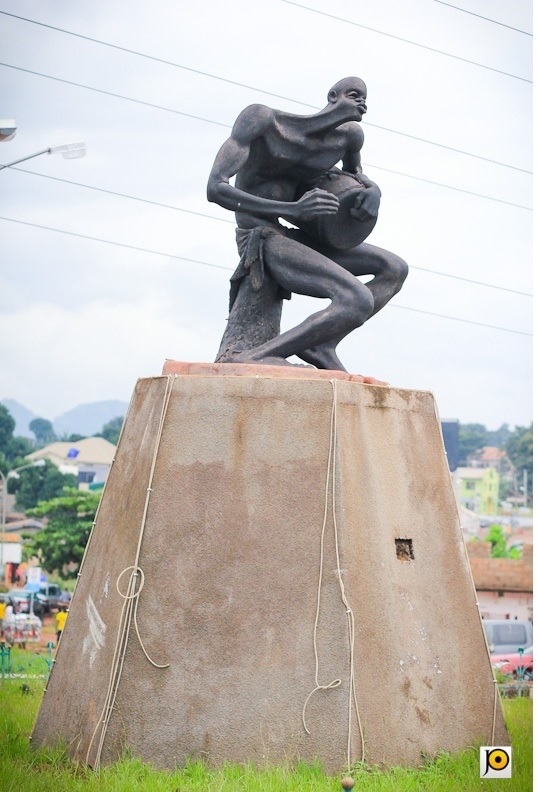
The Popular Oti-Igba Statue

>>>> You can also catch me at my Facebook page: https://www.facebook.com/dili.ojukwu/ <<<<<

Saturday, June 27, 2020

A SPRITUAL RUMBLE: OKIJA MASQUERADE VS. INYI-AGBOKU

Growing up in Ogui Nike can be a bit of fun; but sometimes, it can be scary.

Easter celebrations were usually more popular and noisier than, say Christmas, in Enugu. The reason being that most people travelled to their villages during Christmas celebrations. And this normally leaves Ogui, especially Obiagu Road, the cultural nerve centre of Enugu, virtually empty.
As kids, we used to converge in our small groups, singing and dancing to Ogene tunes, to the delight of our teaming spectators who would, in appreciation, throw some wads of money to us. Whenever a bigger and more fearsome, and in most cases, dangerous, masquerades approached, we would cluster, stoop and kneel in obeisance to the rampaging masquerades who would not accommodate, even little minions like us sharing the stage, attention and adulation with them.
And so, during one of those Easter festivities, we were plying our usual trade on the famous Obiagu Road when one Okija masquerade came threatening. Of course, we did the usual needful: knelt down, and continued singing and beating our Awka-made gongs.
Not too long after the Okija masquerade, well known for its ability to grow as tall as the sky in one swoop and as short as a Congo pigmy in another second, had passed us by, another big masquerade came threatening.
As we knelt down, including our Okwomma masquerade (chai!!), we heard the guttural voice of the deadly Inyi-agboku masquerade, singing some weird esoteric songs. The spirit, yes, that is what a masquerade is, approached us and asked us which direction the masquerade known for hitting its head on the ground when dancing had gone. We pointed the kindred spirit to the direction the Okija masquerade went.
The next minute, we were all spectators: watching the confrontation between Mmanwu Okija and Inyi-agboku from Awkunanaw. Sadly, some of the exchanges were conducted in the spirit world as most of us, little, innocent souls, were not initiated into voodoo practice. But the physical fight we witnessed was both scary and entertaining.
The Inyi-agboku warned its opponent not to hit the ground again with its head. But, after dancing for a second, the defiant Okija masquerade hit its head on the surface of the earth again! Then, all hell went berserk as the Okija masquerade’s head was transfixed to the ground. There was pandemonium: people ran helter-skelter, screaming...

(...Haven't you heard enough for now?…)
(Published on Facebook: https://www.facebook.com/dili.ojukwu/posts/3632655793428587)


Thursday, March 12, 2020

COVID-19 PANDEMIC: COUNTRIES PLAYING THE OSTRICH-HIDING GAME:


As the World Health Organisation (WHO) declares the corona virus (COVID-19) a pandemic, the world should, as of necessity, now sit up and truthfully confront the virus that threatens humanity.
Most countries of the world should now
stop playing the Ostrich game with the lives of their people.
If any country takes this pandemic very seriously, let tests be conducted every morning in every public and private institution. The number of people affected would be mind-bungling!
From my own perspective, some countries are simply playing the usual political ostrich-hiding with this pandemic: they are not conducting effective and strenuous tests so as not to either shock their citizens or make their countries “less safe” destinations in the eyes of the world when the real level of infections in their societies are discovered.
The world should note this: the number of cases prevalent in any country is directly proportional to the stringency of the tests conducted in that country.
QED
In other words, the more the tests conducted the more the cases identified.
With all the noise about the number of cases in Italy, this is only possible because of the level of efforts and resources the Italian government has channelled into dealing with this issue.

Friday, February 07, 2020

THE ERA OF THE SCORCHED SNAKE:


"We have scorched the snake but not killed it. It will heal and be as good as new, and we’ll be threatened by its fangs once again". (William Shakespeare)
The Democratic Party's rank and file must be looking over their shoulders after yesterday's partisan vote in the American Senate.
As Shakespeare's Macbeth learnt after his Banquo's misadventure, the Democrats have simply "scorched" the Trumpean snake; but they have not killed it. And now, like a wounded cobra, Donald Trump would unleash the full venom of his usual foul-mouthed armada on Democrats.
The moral of the story?
You can draw your own conclusions...

Saturday, July 26, 2014

Conducting a Field Study in Nigeria: A Researcher’s Experience


Conducting field studies in Nigeria can sometimes be a daunting, nightmarish and fascinating enterprise. As soon as you introduce yourself, the first inkling of an average Nigerian businessman is to regard you with deep suspicion. As he stares blankly into your face, his mind probes your inner sanctum, scanning and reading you with the intent to verifying whether you are really who you claim to be or one of ‘them’. He surveys your dressing, the style, quality and worth of the fabric, your footwear. Then switching to himself, he searches his inner self to seek answers to a variety of questions bugging him: what could be your ‘real’ or ulterior motives for wanting to meet with him?  His mind would race round a plethora of possible options: may be you are one of the 419 youngsters who go about duping innocent people of their hard-earned money? ‘No, I think he looks more like a representative of the government, may be from the Inland Revenue, coming to probe into my accounts?’ ‘No, I think he looks like a spy trying to find out and steal my trade secret. Or is he a nosy journalist?’


Some entrepreneurs however do not have the patience, time and decorum to engage in such mental exploration and investigation. Which reminds me of Francis Egi, the hardworking and exuberant art director of Egi Creativity Ltd a crafts producer and dealer based in Lagos, Nigeria. When I visited his workshop and showroom at the Cane Village in Lagos in the course of my field study, I noticed an air of somebody who was determined to defend his corners by whatever means possible. So hostile and ebullient was his visage when I introduced myself to him that I thought my face would be reconfigured the next instant with his clenched fist and possibly with some of his craft equipment like chisel and hammer.  He belongs to the group of traders who have had enough of the ‘inclement’ business horizon being experienced by some young Nigerian entrepreneurs. “Look here young man”, he exploded, “I do not have time for fraudsters in whatever shape or form they appear!”


Picture 1: Interviewing Mr Egi in his Lagos Studio
I looked over my shoulder to see if the bespectacled man before me was addressing somebody else. “Yes, I am talking to you!” He muttered in a more deafening voice than before. I allowed some smile to dance around my mouth. Then extending my right hand with my face glittering from the sweat of hot June afternoon in Lagos, I told him that I have come from London to share some information with “intelligent and progressive-minded people like you” on how to help small businesses like his benefit from modern technological tools to make them, borrowing a popular cliché, face the challenges of the 21st century.  

Again, he studied me from the comfort of his dark sun shade. My hand was still hanging.  He heaved a heavy sigh of relief then grabbed my hand with his massive right hand. I felt the squeeze and strain of his unwelcome through his grip. No, I neither bulged nor screamed; just a pretentiously friendly smile. “Are you a journalist or a tax-man?” he sought to know, still clutching my hand. I am neither, I assured him still wearing a fake smile. “Your works are beautiful” I complimented trying to diffuse the rising tension in his countenance, “may I come in please?” He stepped sideways and gestured me inside with his left hand.
Picture 2: Posing in Egi's Showroom.

As our discussion grew warmer and more friendly, I sought to know why he appeared somewhat hostile to me initially. He smiled broadly and apologized for being ‘a little bit unfriendly’. “The problem in this country” he explained “is that some Nigerians are working hard to make a decent and genuine living while some others want to reap where they have not sown through fraudulent means.” He told me that the 419 scourge is infesting a lot of lazy youngsters. “419”, for the untutored, is the term used in describing the practice whereby some people try to defraud others or cheat the system using all sorts of methods. “Some of them send you all sorts of emails, faxes and phone calls claiming they are managers of banks asking you for your bank details so they can transfer huge sums of money often in American dollars, left in their banks by a dead person who has no next of kin, etc, etc” Francis explained with a dint of anger and frustration vividly noticeable and palpable in his expression. 


The 419 scam is so widespread and so disturbing and so vehemently loathed in Nigeria that the government banned any such activity under section 419 of the Nigerian Criminal Code. It was not only this scourge that was worrying Francis and millions of other sincere, hardworking and law-abiding Nigerian small business operators. They also bemoan the level of bribery and corruption in all segments of government from the local authority tax collector who would promise to ‘wipe out’ your tax burden from the records for a fee to the federal government official who would insist on a ‘tip’ before giving you access to have a scheduled meeting with his boss.

My host was visibly angry as he narrated his frustration at trying to receive payment for the art works he had supplied to the government. “You go to their offices today, they would tell you the man who is supposed to sign your cheque is not on seat. You go tomorrow as they requested, you are told he has traveled out of the country. But if you give them bribe you will be ushered into the man’s office. Then, for the man to sign your cheque, he would demand a percentage of the money (usually ten percent) paid upfront. Even when the cheque is raised, the clerk who would register it before you sign for it insists on his own cut or else the ‘register’ will not be found”.

In all fairness, my host’s experience is not unique to entrepreneurs alone. All through my visit to three Nigerian cities of Abuja, Lagos and Enugu for the field study, I noticed that some respondents to my questionnaire would insist on being given ‘something’ for their effort. “What is there for me?” one of them boldly asked me once. When I demanded to know what he meant, he retorted: “You are looking for the information I have, but I am not going to give it out for free. This is standard business practice, isn’t?” I kept quiet for a short while, quizzically probing his face. Then I reiterated that my effort was purely an academic exercise, not business-oriented venture and that I would be willing to share the result of my findings with him if he wished. “And how would that put food on my table?” he retorted. Well, he ended up completing my questionnaire without receiving the ‘something’ he asked for.


Fortunately, it is not all doom and gloom doing research in Nigeria. A lot of entrepreneurs are very friendly and hospitable, willing to share every bit of information with you. In the course of this field work, I came across a lot of people who renewed my faith in the decency and trustworthiness of the vast majority of  Nigerians who are determined to retrieve the battered image of their country from the hands of the infinitesimal minority of rogues (in government and in private business) who are destroying the country. There was Mustafa Kidama for instance who after I made three fruitless attempts to track him down at his workshop in Abuja, promised to visit me in my hotel room to save me the trouble and the costs of coming to his studio. He not only kept his promise, but also completed my questionnaire and very willingly discussed the various problems and issues surrounding the practice of arts and crafts in the country. Mustafa who was then the chairman of the African Arts and Cultural Heritage Association of Nigeria, an Abuja-based arts and crafts dealers’ body, also helped me in administering some copies of my questionnaire to some of their members. 
Picture 3: A pose with Mustafa in his Abuja studio


Also in Enugu, I met a lot of decent, hardworking and resourceful people who contributed immensely to the successful completion of my field study in that part of the country. The members of the various arts and crafts groups like OKANGA and AKA not only shared their expertise and knowledge about their professions, they also helped in giving copies of the questionnaire to others not readily accessible to me. Some members of the AKA GROUP OF EXIHITING ARTISTS like Chris Afuba and Obiora Anidi (both also full-time lecturers at the Institute of Management and Technology, Enugu) participated actively in the study. They also offered to take part in the subsequent part of the project. We had some good time during one of my visits to their studios when I was taken to Afuba’s home and treated to some of the most sumptuous Nigerian delicacies I have ever had.
  
Sometimes however, my experience was not that delectable. There was, for instance, a visit to Cosmas Enegwu of the OKANGA group of artists who is also the director of Cosann Art Gallery, Enugu. On the day I came to keep an appointment after series of cash-guzzling phone calls, he had, as promised, assembled some members of the group in his gallery. Unfortunately, some armed bandits had their own menu. As soon as I arrived his studio that fateful Friday afternoon at their Upper Chime base, we heard three gun shots from some streets opposite his gallery. He grabbed my laptop and asked me to dive for cover. We all quickly made our escape through a rear window to a small room behind the gallery. I was sweating profusely, terrified with fear. “Don’t worry Dili” he tried to assure me, “we are used to this type of incidents.” Later, news came round that a group of robbers had snatched a brand new Range Rover vehicle at gun-point. Well, the rest of the session was conducted with one eye on my hosts and the other on the exit door.
Picture 4: Sharing some points with Cosmas in Enugu
That is also part of what one sometimes experiences while conducting field studies in Nigeria.

Generally, Nigeria’s bourgeoning small businesses, particularly those in the arts and crafts industry have the creativity and quality to capture the global market. They need however to embrace Electronic Commerce (e-Commerce) technologies in order to facilitate this migration from the current face-to-face transactions that generally characterize their business philosophy and practices to a more modern business model as prescribed by e-Commerce. 
(This piece was published in the Sun Newspaper on Saturday October 12, 2013, pp. 36 & 37)


PETER OBI MOVEMENT AND NIGERIAN YOUTH EMPOWERMENT

  The youth constitute the greatest force in any polity. The torrent of their power can dislodge and uproot the strongest political barrier ...